Saturday, February 13, 2010

Cobra or Film is the Disease, Cobra is the Cure


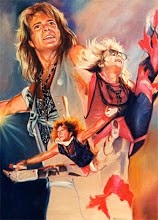
Cobra

This came highly recommended by my friends Emily & Jesse. All they could say between laughing fits was that every line of dialogue in Cobra is the most overwrought cliche you could possibly think of. How have I neglected this movie for so long?! Because that sounds great.

When I think of the great auteurs who write, direct, and act in their own films I immediately think of illustrious names like Orson Welles, Woody Allen, John Cassavetes, Beat Takeshi Kitano, Jean-Luc Godard, and...Sylvester Stallone*

And what's funny is that this is a Cannon Films production. The same Cannon Films that produced Godard's King Lear! What?

We open with Stallone quoting rampant American crime statistics while a barrel of a gun is turning towards the audience and lets a bullet fly. COBRA. Cut to a motorcycle riding in silhouette against a blood red sunset. Visual Poetry.

We then see a ritual held by a cult of murderers who like to clink axes together in dimly lit LA drainage reservoirs. Obviously they must be part of a persecuted religion. Look closely and you can see that the cult members come from all walks of life! One is wearing a business suit, another in a construction worker's outfit. They're like The Village People of murder cults. Oh yes, and they wear panty hose on their heads, just because.

So when a psychopath starts opening fire on a grocery store, the only thing the regular (read: pussy) cops can do is "call the Cobra" who swoops in whipping a shitty in his souped up 1950 Mercury, aptly named "AWSOM50" on the vanity plate. Cobra goes in ready to lay it down. After the psycho tries to shoot him to no avail, Cobra gets on the PA and tells the psycho, "Hey dirt bag. You're a lousy shot. I don't like lousy shots."

When the psycho tells him he'll blow the place up with a bomb, all Cobra has for him is "Go ahead, I don't shop here." Fuck yeah he don't! You fucking tell him Cobra!

Cobra's nemesis and head of the cult is known as The Night Slasher who has terrorized the city and killed 16 people. Oops, make that 17 as we see cut to a scene of them killing a waitress. And you know who's the only cop in the city who has figured out that there's more than one killer? Fucking Cobra, that's who. But sadly the other cops don't want to listen because they're pussies who play by the book. And don't look good in mirrored sunglasses or black leather gloves.

Next, Brigitte Nielsen shows up as Ingrid, a fashion model and Sledge Hammer (David Rasche, fuck yes!) as the photographer taking her photo. And what a photo session this is. Brigitte in various costumes posing with a bunch of robots on an all white set. You can almost taste the coke running down the back of your throat watching this. And as Sledge Hammer is walking Brigitte to her car (trying to get her to sleep with him the whole, natch) they get attacked by the murder cult. Oh. Shit.

She barely gets away which brings her to the attention of Cobra and his pal Sgt. Gonzales. That night The Slasher tries to kill Brigitte at the hospital. Luckily, she escapes but only after being caught in an homage to the "Here's Johnny" Scene from The Shining but not as cool. Meanwhile, an axe clinking flunky tries to disturb Cobra at his swank ocean-front high-rise bachelor pad where he's having a quiet night in, cleaning his gun and eating cold pizza with his leather gloves still on. He tries to sneak in from the patio but Cobra's too smart for that shit and throws dude over the side to his death. Cobra's so bad ass he doesn't even need to make a witty remark this time.

The next day, Cobra gets chewed out by the smarmy Detective Monte at the station. He's gonna be stuck on The Zombie Squad forever if he keeps this up. Cobra suspects that the killers have an inside man with the police. And by god, you know what? He's right. When he picks up Ingrid from the hospital, the killers are following and ambush Cobra and Ingrid.

And we're lucky they do because now Cobra gets to show off his bad ass car. When those scumbags pump a few bullets into the Merc, Cobretti whips a shitty, pops it in reverse and shoots his uzi out the window. Because the usual laws of physics and car maintenance do not apply to Marion Cobretti. Then Cobra flips a secret switch on the dashboard that says "Nitrous". Which made think twice. Maybe it's not a nitro-injection system and Cobra just likes to do whip-its in the privacy of his AWSOM50? It would at least make him laugh every once and a while. Finally Cobra crashes into a docked boat and totals the Mercury. It's not Cobra's best day. Maybe he should have had a tank of nitrous oxide on hand for when shit like this happens...

Cobra gets chewed out again by Det. Monte who says he's using Ingrid as bait and putting the whole city at risk. So instead of hanging out in L.A. waiting to be attacked, Cobra and Ingrid decide to take a nice trip down the Pacific Coast Highway with his pal Sgt. Gonzales and lady cop Officer Stalk so they can get attacked in another town.

Cobra and Ingrid stop at a dinner and have a nice heart to heart.
Ingrid: What do you do to relax?
Cobra: Look for trouble.
Ingrid: Do you ever get involved?
Cobra: With a woman?
Ingrid: Yeah, a woman.
Cobra: A real woman?

Ha ha! I can only imagine Cobretti making out with a Real Doll, getting pizza grease and gun oil all over it. That would be awesome.

Enough of that tangent. The main thing at the dinner is that Cobra notices Officer Stalk on the payphone the whole time...why this is played for drama I have no idea. There was already a scene 40 minutes ago implicitly showing that she's part of The Night Slasher cult. All we need is a reaction shot of her at a hardware store looking at axes and doing her best to control the urge to clink them together.

Cut to nighttime at the roadside motel they're staying at and wouldn't you know it, she's on the payphone again. She must have a lot of loose change on her person. Maybe the sound of clinking quarters is a good substitute for clinking axes. You never know. Cobretti is holed up in his room with Ingrid, unpacking his stash guns and ammo. Because Stalk has given them away and the cults a'coming to get them. And they're all riding up on motorcycles because this is 1986 and gas was like fifty cents per gallon then. But not before Cobra and Ingrid get to do it in their motel room. Luckily for her he's not wearing his leather gloves. Or suggests a three-some with his Real Doll. Because that would be weird.

The next morning, it's showtime as the cult shows up at the motel! Cobra opens fire, hitting every dude on the first shot. Cobra has obviously played a lot Hogan's Alley. Cobra and Ingrid make a run for it in a pick-up truck; Ingrid driving, Cobretti mowing down motherfuckers from the back. When they plow through some burning cars in the road, Cobra gets thrown from the back and lands in a perfect rolling crouch. Because he was a varsity gymnast in high school where he felt emasculated by the name Marion Cobretti.

They run into an orange grove where Cobra keeps on mowing down a never ending supply of cult members. Ingrid runs to a factory which must be conveniently located on the orange grove. Maybe it's a Minute Maid juice factory? That has a lot of open flames burning. Because Cobra dumps a barrel of fuel on to one of the thugs. As he strikes a match, he mumbles "You have the right to remain silent," before he drops it on the poor bastard, engulfing him in flames.

Regardless, now The Night Slasher is on the scene and he's on the hunt. Cobra gets Stalk in his sights and shoots the old bull dagger. Now it's time for The Night Slasher to be the hunted. When The Slasher proclaims "You can't stop us! We are the future!" that's the perfect moment for Cobra to set his laser sight on him and say, "No, you're history."

The Slasher calls Cobra a pig and tells him he has to take him in, he has rights, the courts will set him free because he's insane. But you know damn well that ain't gonna happen. Cobretti has just killed 50 other people who didn't even stop to have a dramatic conversation with him. Oh no...Cobra lets him know, "This is where the law stops. And I start."

But god damn it all to hell, old Bull Dagger Stalk drops out of nowhere and jumps Cobra. Too bad Night Slasher has bad aim because he shoots and hits her. Well, that was a waste of a good surprise attack. Cobretti and Slasher fight it out until Cobretti impales Slasher on a conveniently dangling crane hook that drops him in a fire.

Det. Monte shows up and tells Cobretti he sure made a mess but he got the job done. No hard feelings? Fuck no. Cobretti goes to shake his hand and punches the shit out of him. Looks like he'll be working on the Zombie Squad permanently. Cobra and Ingrid get on a LAPD motorcycle and drive off into the sunset to the strains of John Cafferty & The Beaver Brown Band playing his theme song, "The Voice of America's Sons".

I'm not making that up.

So, not too bad of an attempt to write while viewing/stopping and pausing.


*To be fair he doesn't direct Cobra but he did write the screenplay and star in it. Sly has directed a few of his own films and let's face it...in the 80's the star of an action movie had tons of input into the direction, especially if that star wrote the screenplay and got his hot Swedish model girlfriend to co-star in it, even if she has no discernible acting skills.

Thursday, February 11, 2010

Capsule Reviews

Alright, so after writing quite a lot about Nicholas Ray's In A Lonely Place, I thought I should get back down to business and really kick out the jams. Because if I keep going at this pace I will never get done. And Jean is out of town for work this week, so I really need to keep some space available on the DVR for it to record her stuff.

I'm going to run with a theme here of "Things That Are So..." since all of these movies really exemplified the era in which they were made. You'll see what I mean. So let's see what I've seen...

The Mouse That Roared
Things That Are So 1960's (technically 1959). I had high hopes for this since it stars Peter Sellers, Jean Seberg, and William Hartnell. Basically you can play Six Degrees of Kubrick, French New Wave, or Doctor Who and this film is your ace in the hole.

Sadly, most comedies do not age well. I happened upon Wayne's World the other day on TV and it made me want to kill myself for ever thinking it was funny. So nevermind that 10-star review in the imdb link I included. The Mouse That Roared was a chore.

Peter Sellers stars as the queen, prime minister, and head of the army of the tiny European nation of Grand Fenwick that finds itself going bankrupt. They realize that if they declare war on the USA and lose, they'll be wealthy because the US always gives tons of foreign aid to countries they defeat. Jolly good.

Peter Sellers' bumbling character Tully leads the small army with the help of Will Buckley (William Hartnell, the first and best Doctor Who) and they'll need it since the Grand Fenwick army still dresses in chain mail and their primary weapon is the bow & arrow.

They set off for the shores of the US and land on the day that New York City is under lock down over testing of the new earth shattering weapon, The Q Bomb, invented by Dr. Kokintz, who is assisted by his lovely daughter Helen (Jean Seberg). Oh yes, and these two are the only people guarding it on the day of its supposed testing. Which is happening in a nondescript office building in Manhattan. Or something. Scrutinizing the details will just drive you mad.

Hilarity ensues and the underdog Grand Fenwick army gets its hands on the Q Bomb and brings it back home to become a nuclear power that stands up for all the small nations of the world. I get the satire of it but the execution leaves something to be desired.

Jean Seberg is given the thankless cliche role of love-interest and she does her best with it. William Hartnell gets to be gruff and stern. Peter Sellers does his Peter Sellers thing of playing multiple roles. The queen is out of touch with common people. The Prime Minister is actually the funniest role but he's somewhat under used. I can see where Stephen Fry got his inspiration for playing Melchit in Black Adder from. And Tully is a sad sack but not very funny and of course is in 90% of the film.

Interesting enough concept but good lord the pacing is terrible. Basically an hour and a half long episode of The Beverly Hillbillies "Robin Hood" story. Which makes sense as the director, Jack Arnold, was a regular TV hack and it shows.

Mother, Jugs, and Speed
File under: Things that are so 70's.

We can accurately carbon date Mother, Jugs, and Speed to 1977 by the soundtrack alone. We get some Frampton, Brothers Johnson, Cat Stevens, a sappy Michelle Phillips ballad and a full on coked out disco theme song. One glance at the locations and we know we're in the thick of 1977 Los Angeles.

The film follows the misadventures of a crew of EMTs who work for an independent ambulance company trying to make ends meet. This movie must have made a big impression on Quentin Tarantino. You've got Harvey Keitel, you've got razor sharp dialogue, sporadic violence, great character details, and the cinematography has that same golden sunny California look of Reservoir Dogs or Pulp Fiction.

All directed by Peter Yates! The director of films like Bullitt and The Friends of Eddie Coyle. So this is a great comedy turn from Yates who balances it all with his skills for drama and action. The script is great if not a little heavy handed in dealing with some of the big issues of the time, mainly the differences and similarities between racism and sexism. There's a great cross section of 70's L.A. seediness on display as we follow the EMT's from call to call. Did Martin Scorsese not see this film? Mother, Jugs, and Speed is much better than Bringing Out the Dead and features no Natalie Merchant songs.

Bill Cosby of the 70's was so much cooler than Bill Cosby of today. As Mother, he's the smartest guy in the room and not afraid to speak his mind. He's got a take no shit attitude and perfect one liner for any situation. Raquel Welch plays Jugs, the long-time dispatch operator who wants to be an EMT and deals with the requisite sexism thrown her way. Harvey Keitel plays it cool as Speed, an ex-cop EMT who was thrown off the force for allegedly (more like definitely) selling coke who hooks up with Jugs. All to the chagrin of the smarmy and lecherous Murdoch played by Larry Hagman in fine form.

A great surprise. Sadly the same can't be said for...

The Adventure of Sherlock Holmes Smarter Brother
I really wanted to like this. I grew up on The Producers, Blazing Saddles, and Young Frankenstien. So when I saw the cast listing of Gene Wilder, Marty Feldman, and Madeline Kahn I had high hopes. Sadly this film doesn't deliver. Gene Wilder is in Freak-Out Screaming Mode but he's never overreacting to anything significant. He's just screaming a lot. The point of Frederick Frankenstein's blow outs were that he was screaming out of frustration at the other characters and for his reputation as a Frankenstein. Being a Holmes just doesn't have that kind of stigma.

Really this film seems to have been made so Gene Wilder and Madeline Kahn could do some song & dance numbers together. There are some clever gags but it pales in comparison to Young Frankenstein. If anything this film shows that Young Frankenstein was the perfect synthesis of Mel Brooks and Gene Wilder talents. Without each other they never made as subtle or intelligent of a film.

A Night In Heaven
Things That Are So 1983.

1. Christopher Atkins post-The Blue Lagoon is in it. He's a male stripper. We get a glimpse of his wang during the Hard R sex scene with Lesley Ann Warren.
2. Deney Terrio
3. Music by Jan Hammer, Bryan Adams, and Human League.
4. Short shorts as far as the eye can see.
5. The Dawn of the Recumbent Bicycle
6. John G. Avildsen directs!

They don't make high concept Hard R melodramas like this anymore. Lesley Ann Warren stars as Faye Hanlon, a community college instructor who begins to have an affair with one of her students, a hot young male stripper played by Christopher Atkins. Her marriage is on the rocks after her husband, a rocket scientist, is fired for refusing to design missiles. He now spends his time inventing the recumbent bike. And staring off into the middle distance while sitting around their wood paneled kitchen. Instead of making time for his incredibly hot wife (bare with me as I am biased here. Warren played Miss Scarlet in the film Clue, and a key figure on my journey through puberty in the 80's).

So Faye joins her sister Patsy (played by Deborah Rush, Mrs. Blank from Strangers With Candy!) one night for a trip to the local male strip club. Because every town has one evidently. Then again this film does take place in Florida.

Oh man, this strip club is off the chain. Not only is packed with ladies and all the strippers are hot, but they have an emcee who narrates EVERY SINGLE THING of what's going on on the dance floor in vivid detail. Basically this is where Patton Oswalt got the emcee character he did in Starsky & Hutch. Spin that with the incredibly gay stage banter of Paul Stanley and you have have it. Your time is worth it to watch this movie just for the strip club scene.

After watching a few hunks do their thing Faye and Patsy and the girls are treated to an elaborate strip routine done by Ricky the Rocket who is dressed up in a Star Wars-esque space pilot outfit. And when he takes his space helmet off, it's none other than Ricky, Faye's student who she's flunking! Obvioulsy this means that he needs to come up and dance for her until they share a kiss to the strains of The Human League's "Obsession".

Soon Faye is joining her sister and crew on frequent trips to the strip clubs and begins an affair with Ricky. Finally Faye's husband stops obsessing over his recumbent bicycle and finds out that she's having an affair which all of a sudden makes him want his wife. The husband kidnaps Ricky and brings him out to the middle of a lake and makes him strip naked while he holds a gun on him. After a lot of yelling and screaming he leaves Ricky alone, stranded on the boat.

And that's about it. On the way we have several sex scenes that go on way too long, a trip to a video game manufacturing plant, an incredibly long tracking shot outside a space shuttle plant, and Deney Terrio as Ricky the Rockets buddy.

Wow.

Finally we have...

Harley Davidson and The Marlboro Man
Things That Are So 1991.

1. Mickey Rourke and Don Johnson star.
2. Tom Sizemore plays the bad guy.
3. Daniel Baldwin and some guys play relentless killers who wear kevlar trenchcoats and walk in unison.
4. Tia Carrere is Sizemore's henchwoman and has zero lines of dialogue.
5. As does Vanessa Williams although she gets to play a singer who has a romantic history with Mickey Rourke. Yeah. That's what I said. Oh yes, but now she's married to Big John Studd of WWF fame.
6. Lots of scenes set in an old airplane junkyard.
7. Mickey Rourke's leather biker jacket has a tribute to Stevie Ray Vaughn sewn into it. Now that's Talking 'Bout Africa!

If you ever wondered what a movie made by Howard Chaykin would be like, this is it. Nearly every line of dialogue is a macho cliche. There must have been tons of coke on-set.

I know The Adventures of Hudson Hawk or The Last Action Hero get called out for being the apex of stupidity in Big Action Movies but we have some competition here. So bad it's great!

Monday, January 18, 2010

In A Lonely Place


In A Lonely Place

I began writing this review by taking live notes while watching it but it soon became apparent that I would really only be writing a synopsis and not a review. I would just be imparting the plot and not the feelings. It came in handy for noting the great dialogue but I'm hoping to write more than synopsis.

So I threw away most of what I wrote and will instead focus on the mood and tone of the film. The power of individual scenes as opposed to the mechanics of plot.

------------------------

The name of the film says it all. In A Lonely Place is where Bogey's character Dixon Steele lives. He's a screenwriter who hasn't had a hit for years. He's a cynic, a misanthrope, and prone to fits of rage and violence at perceived slights. What is unsaid is that Dix is certainly an alcoholic and probably suffering post-traumatic stress disorder as well. The very first scene confirms this.

Driving through Hollywood, Dix stops at a red light. A woman in the car next to him says hello, she was in his latest film of his, doesn't he remember her?

"I make it a point never to see pictures I write."
This upsets her husband, "You, stop bothering my wife!"
"You shouldn't have done it honey, no matter how much money that pig's got."
"Pull over to the curb."
"What's wrong with right here?!"

And with that the couple takes off and our film begins. This will be a role made for the public persona "Bogey" but with more depth. His violent behavior is not to be celebrated but pitied. This is the Bogart admired by Jean-Paul Belmondo in Breathless. And In A Lonely Place is a noir not of gangsters or femme fatales (there are none) but of tragedy. Of people doomed by succumbing to impulsive desires.

Dix then goes to a bar to meet his agent who would like him to adapt a popular romance novel. The director is there as well who gives Dix a hard time for his lack of success and enthusiasm for the project. Dix insults him by calling him a "popcorn salesman" but he can't deny that he's one as well. Then a hot-shot producer arrives and insults Dix's friend, a washed up old actor, and Dix starts a fight for real this time.

He then picks up a coat-check girl Mildred Atkinson who is reading the novel he's to adapt. As he has no intention of reading it, he asks her to come to his apartment and tell him all about it. She has a prior date with a boyfriend but calls it off for Dix. This is all quite understated for 1950 but it is implied that Dix has designs to have sex with her as well. But he soon finds her to be innocent and old-fashioned and once she has told him about the plot of the book (which she loves) he gives her money for a cab ride home.

The next morning (early) Dix is awoken by a knock on the door. It's his old army buddy Brub Nicholai who is now an LAPD detective. Dix is brought downtown and told that the girl, Mildred was found dead that morning. Instead of acting shocked or outraged, Dix takes it all with a cynic's shrug and then theorizes why she was killed. This is the habit of the screenwriter and does not go over well with Capt. Lochard who takes Dix lack of empathy for guilt or at least suspicion. The only other suspect is the boyfriend who Mildred broke off her date with to go to Dix's apartment.

To corroborate Dix's alibi, the police then call in Laurel Grey, a neighbor from the apartment building. She confirms that she saw Dix and Mildred arrive and then Mildred left by herself later. The police let Dix and Laurel go while Capt. Lochner tells Lt. Nicholai that he plans to put Dix under surveillance. Knowing that Nicholai is war buddies with Dix, he asks him to invite Dix to his home for dinner and try to see if he lets any hint of guilt slip.

In this scene we see shades of Camus' "The Stranger" and once again for 1950, a hint that the fictional LAPD of the film is not very far off from the real LAPD which has always had a reputation of trying to pin guilt upon innocent suspects.

At dinner, Brub talks about the details of case and Dix offers his ideas for how Mildred may have been murdered. He proposes that she was killed in a car and thrown from it. To illustrate this he has Brub and his wife role play the scene. They sit on two kitchen chairs, replicating the interior of a car. Dix directs them. He gives the killer's motivation of being a cuckold and nagged by Mildred for all his failures. His only course of action to stop her constant berating is to kill her. As Dix directs he gets excited as he pushes the scene to its climax, and this rubs off on Brub as he loses his control and grabs his wife by the neck. Only at the last minute does he compose himself and realize that he is hurting his wife as Dix looks on, engrossed in the action.

Here we begin to see that perhaps Dix is certainly not as sane as we had thought. His impulsive behavior and morbid use of role playing has brought out real violence between his two "actors". Bogart really turns it loose and the way he gets off on the strangulation is indeed very scary and morbid to see from the lead of Casablanca or Sabrina. This is unlike any populist role he has done before and a call back to his roots in crime noirs. What's astonishing is that he took on a role like this at this stage of his career. A modern equivalent may be Jack Nicholson when directed by Sean Penn (The Crossing Guard and The Pledge).

Sometime later he begins a relationship with Laurel Grey (played by director Nicholas Ray's real wife at the time, Gloria Grahame) who he treats with the devotion of a savior, which she is in a way by backing up his alibi to the police. In him, she sees someone as wounded as she is.

When professing his love for her, he is at once gentle, loving, desperate, and pathetic. He is overcome and we see the cynic begin to feel something close to love. It's an extraordinary display by Bogart and un-self-conscious in its honesty.

Dix and Laurel soon begin a dysfunctional and codependent relationship. Dix finally feels at peace with Laurel's love and devotion and has taken to working around the clock on his script adaptation. The opposite of Michel Piccoli and Brigitte Bardot in Godard's Contempt.

But nothing last forever.

As Dix begins to find success with writing his script, he begins to notice that the police are following him. One night on the town with Laurel they notice an undercover cop arrive which sends Dix into a rage. Another night while they are out with the Brub Nicholai, his wife Sylvia accidentally asks Laurel how her meeting with Capt. Lochner went. This is news to Dix and it again fills him with rage to think that Laurel is talking to the police behind his back.

They get in his car and he drives off, speeding out of control through the hills of Los Angeles. They almost hit another car and when they stop, Dix gets out and nearly beats the driver of the other car to death. As he raises a large rock over his head to throw at the unconscious driver, Laurel pulls him back to rationality. Here is another crack in Dix's self-control and an act that scares Laurel and begins to make her doubt his innocence and sanity.

When Dix asks her to marry him, she says yes not out of love but out of fear for what he'll do if she says no. Laurel begins making plans to flee and calls a travel agency to book her a ticket to New York. That night as they go out to "celebrate" their wedding plans Dix discovers that Laurel has given his rough draft of the script to his agent he has another outburst in public which sends Laurel running back to her apartment. There, Dix asks her why she left. She says she wanted to get home to pack for their wedding trip. As she locks herself in her room the phone rings and Dix answers it. It is the travel agency calling with her ticket to NYC. Enraged, Dix busts in and begins to strangle Laurel, angry that she would deceive him. Laurel breaks free and the phone rings again. This time it is the police calling to say that they have finally found the killer in the Mildred Atkinson case and that Dix is free of suspicion. Dix realizes that he has destroyed the love that he had sought for so long.

In A Lonely Place was the second and last film Bogart and Nicholas Ray made together. It seems that this was a personal film for both men. Originally Bogart wanted his wife Lauren Bacall to play Laurel but she was under contract to Warner Brothers at the time and could not do it. So Nicholas Ray has his wife, Gloria Grahame portray Laurel instead.

Ray and Grahame had a tempestuous relationship at best. Two years after making In A Lonely Place, Ray divorced Grahame after finding her in bed with his teen aged son Anthony Ray and eight years after that, Grahame married the younger Ray.

It is no mistake that Nicholas Ray was an influential director for many future generations of personal filmmakers. He was adored by the French and American New Wave directors, notably Jean-Luc Godard who has worked with the idea of combining love and work for almost his entire life as a filmmaker.

There are some aspects of the film that seem convenient or illogical. Dix seems to fall for Laurel at the drop of the dime, and that just may be the point. Laurel is complicit and willing to enter into this relationship as well. Several times in the film someone tries to warn her about Dix and his temper but she denies it exists. Only after Dix nearly kills someone does she begin to doubt her safety and plot a way out.

Once the story of Dix and Laurel takes off, the film loses some of its satirical or cynical edge in mocking Hollywood. This isn't detrimental to the quality of the film but it is missed since the scenes that do are razor sharp. At one point Mildred says that before she moved to Hollywood, she thought actors just made up their dialogue. Dix's response is priceless; they do, it just depends on how big of a star they are.

In A Lonely Place is also part of a trio of films made in 1950 that dealt with the culture of Hollywood and film making as integral parts of the story. The other two being All About Eve and Sunset Boulevard. All About Eve deals with the behind the scenes drama of rival actresses and is the more popular film as it's themes are more universal. Sunset Boulevard takes the drama of an out of demand actress succumbing to self delusion and insanity by trying to recover her career. It's a tour de force for director Billy Wilder and the casting of silent-film star Gloria Swanson is poignant. Her insanity is easily recognized compared to Dix codependency and bitter rage.

In A Lonely Place
is the less popular of the three but no less influential. I'd say that this film was as influential on Godard as Sunset Boulevard was for David Lynch. Highly recommended.

Friday, January 8, 2010

Mafioso

Mafioso

You've got to hand it to Turner Classic Movies. They have been incredibly consistent in following their remit. They show nothing but classic films and they've been doing so since they began. Not many cable channels can say that. AMC used to show uncut classic films but now they have tons of commercials and original programming. Which isn't bad. I love Mad Men. But sometimes I miss there being an alternative to TCM. Bravo used to be an excellent channel for catching films like Weekend or Shoot The Piano Player along with Twin Peaks reruns. Now all Bravo does is reality shows. When they do show a movie, it's more often than not going to be Lethal Weapon rather than Breathless. Sad.

So it's good to know that TCM still does what it does. They show Citizen Kane and Treasure of the Sierra Madre or Casablanca nearly once a month but they also bust out some overlooked gems like Mafioso too.

* * * * * * * * * *

The general story is Alberto Sordi plays Antonio Badalamenti, an inspector at the Fiat factory in Milan and is a model employee, eager to please his boss. Before he leaves on holiday to visit his family in Calamo, Sicily his manager asks him to also deliver a special gift to Don Vincenzo , the local mafia boss, who slowly coerces Antonio into performing a hit to repay him for a favor.

But the real story is in Antonio bringing his wife Marta and two girls to finally meet his family
. He has obviously not been home in a long time and is insecure about his modest beginnings. Much of the movie is Antonio trying to smile through or explain away his family's unsophisticated and provincial behavior. There is just as much dramatic weight given to the mafia story as there is to whether or not Antonio's mother will accept Marta in to the family.

And Antonio has quite an eccentric family. Lets not lie, they're peasants. Mama is quiet in a "slowly passing judgment" kind of way. Papa is a grizzled and stubborn old thing and his sister Rosalia would be married to her lazy boyfriend by now if she didn't have such a hideous moustache (I know how to pick movies with female moustaches!). To lift them from their poverty, Papa has a plan to buy some land to turn into a homestead.

Antonio takes his father to meet the man selling land. He says he now wants 200 Lira per acre instead of 50 because the land contains mineral water. Antonio has to stop his father from getting in an old man fight. After breaking them up, his father angrily takes off on his donkey, abandoning his cowardly son.

As Antonio starts to walk away he is greeted by Don Liborio. They go in to town and chat. Don Liborio asks, does Antonio remember being a "good son" to Don Vincenzo during World War II? Of course, says Antonio, I respect Don Vincenzo as I do my family.

The next day Antonio is summoned to Don Vincenzo's villa. The man selling the land is there and deeply apologizes; he'll honor his original price. Antonio pledges his gratitude to Don Vincenzo. Leaving church, Antonio is invited on a hunting trip by his old friends. Isn't hunting season over, he asks? Not for Don Vincenzo. Antonio hesitates but Marta insists he should go as she'll be busy giving Rosalia a makeover. Just when Antonio wishes they could leave, Marta begins warming up to the family.

Antonio wakes up early to meet his friends but is met by Don Liborio instead. He takes Antonio to Don Vincenzo who asks him to repay his favor. He'll be perfect for this job since he no long lives in Calamo, no one will suspect him. All he needs to do is deliver a letter for Don Vincenzo. That's not so bad.

He's taken to an airplane. A man tells him to get inside a large crate. Antonio can't believe it. Does he need to go to the bathroom? He says no. And with that he's put inside. His flight is conveyed in a 5 second POV shot of the wooden slats of the crate. When he's let out of the crate he immediately crabwalks to the lavatory. Then he's taken to a car. As they drive he sees exactly where he's been brought to; New York City!

He's taken to an apartment and eagerly delivers the letter. The man at the door simply takes it and rips it up. He's then shown photos of a man who is an enemy of Don Vincenzo. He must kill this man before he can return to his wife and family. Everything has been planned out. All he must do is act out one simple part of the plan.

He's brought to a barber shop where the man from the photo is vulnerable in the barber's chair., getting a shave. Antonio hesitates at the door just as the man knows something is up. Antonio pulls the trigger. He runs outside and is picked up again by the car and immediately flown back to Sicily. That's his trip to America.

When he arrives home, he finds that his mother has embraced Marta since she waxed Rosalia's moustache and made her more confident. It's a happy ending for Marta but Antonio has just been coerced into murder. So it's all bittersweet as returning home has reunited him with his family but cost him his soul.

The entire cast are great. Alberto Sordi was a legendary Italian comedy star and plays Antonio with the perfect amount of bluster, naivete and discomfort. Every facial expression tells a story. I'll certainly check out any other films he has been in.

I'm not very familiar with Italian Cinema aside from some of the classic Fellini and Antonioni films, so this was a treat to find bouncing around on cable. The comedy and drama are intertwined masterfully. Everything works together to make the story complete.

Friday, December 18, 2009

Ones That Didn't Make The Cut

The gamble to recording random shit off of cable is that every once and a while you pick a bomb. These bad decisions tend to hang around like a bad case of herpes until you finally decide to watch it. So until I get around to reviewing Monte Hellman's fantastic Two-Lane Blacktop, we'll look back at the ones that should have been keepers.

Exhibit A.

Foul Play

I have random memories of this Goldie Hawn/Chevy Chase comedy from my childhood, especially the scene of Dudley Moore turning his apartment into the ultimate sexy bachelor pad when he thinks he's going to score with Goldie. But that is all I can ever remember about it. Well, that and the scene with Billy Barty (I was a big fan of John Byner's Bizarre as a kid). So watching it now, Foul Play does not hold up AT ALL. Firstly, Chevy Chase is barely in it, and try as he might, he is not in allowed to work to his strengths. This is a Goldie Hawn vehicle first and foremost. But sadly, nothing very funny happens. Aside from Dudley Moore busting out his Murphy Bed of Love and obliviously seducing Goldie.

Brian Dennehey shows up as a cop, of course, and he's Chevy Chase's partner, which is a buddy-movie I'd pay to see. But alas, it was not to be. Instead we get a boring "homage" to Hitchcock, years after Mel Brooks did it better in High Anxiety. I wound up fast forwarding to the Chevy parts and even those failed to click. This was Chevy's first post-SNL film and it's odd that it took two years for it to happen. In its day this was a hit but viewing it now, it's incredibly boring and unfunny.

So lets chalk this up to nostalgia for the early-80's when any SNL cast member could do no wrong. I have a lot of time for that era and am still kicking myself for not buying that DVD of Goin' South when I saw it.

Exhibit B

Capricorn One

Elliott Gould. Orenthal James Simpson. James Brolin. Hal Holbrook. Telly Savalas. Karen Fucking Black! What went wrong?

Well, this turgid sci-fi thriller thinks it's All The President's Men for the Star Wars crowd. It's all about a Mars landing being faked a la the Stanley Kubrick/Moon Landing conspiracy. Which sounds interesting at first but the pace is sooooo damn slow that the film never gains speed. Brolin and The Juice play the put-on astronauts who get talked to death by government agent Hal Holbrook. Meanwhile Elliott Gould and Brenda Vacaro play two journalists who kind of discover that the Capricorn One mission is a fake. Or something. Merciful Jesus on a unicycle, Elliott Gould is wasted in this. If one actor personifies the 70's American New Wave, it's Elliott Gould. His run of films with Robert Altman is unfuckwithable amongst other stuff like Getting Straight (shot by Laszlo Kovacs!) or Little Murders (shot by Gordon Willis). Barfff. All I did was fast forward through it and barely saw any Gould. Just hours of Holbrook explaining the lame Mars landing conspiracy and Brolin and OJ looking shocked.

It makes sense that Peter Hyams directed this. He gets slack for attempting 2010: The Year We Made Contact but you can't make a silk purse out of Stanley Kubrick's sloppy seconds and you can't make Capricorn One a film that I'd sit through.

Exhibit C

The Lost Missile

Lets not mix words. I love Robert Loggia. Dude has been around forever playing hard-ons and pricks so when I saw Turner Classic Movies was showing a Loggia movie from the 50's, I had to record it. What was I thinking? Loggia didn't hit his stride until the 70's. But maybe this would be a cool pre-cursor to the Modern Loggia? No Greg, it's not. It's exactly what it says it is, a cheesy 50's sci-fi movie of the kind that TCM loves to fill time with between Bogie marathons and Jimmy Stewart retrospectives. Still, it was interesting to see a young, skinny, and leading man-type Loggia as opposed to Frank Lopez in Scarface. But this was so bad I gave up after 10 minutes, which felt like 40. I had to check imdb to be sure that Ed Wood didn't direct this thing.

Saturday, October 3, 2009

Capsule Reviews

Two months since my last posting? Time flies when you're having fun. It's been busy here at the House of Constantly Filling DVR Que. I went to Ireland for a week, I've been working as much as possible, and in a few short hours my wife and I will be driving to Chicago to catch one of The Jesus Lizard's last reunion shows. So exciting things have been afoot.

And now on to some capsule reviews.

Burden of Dreams

I'll admit right now that I've not seen Werner Herzog's film
Fitzcarraldo and I'm sure this documentary would be more enlightening if I had. But I get the gist of it from this documentary and can only wonder what it would have been like if Jason Robards and Mick Jagger were the leads. But Robards got dysentery and Mick had to go on tour with The Stones so enter Klaus Kinski.

And we don't see Klaus in this doc too often. I was expecting him to be in full on freak mode but the strangest thing he does is be grossed out by the offer of the natives' liquor which they ferment with their own spit. Fair play to him.

The real story is in how it took two years for Herzog to get the film in the can and the incredibly frustrating things he had to do to get it there. He's either an insatiable masochist, a genius, or both. IFilming was stopped several times by either weather (rainy seasons that last for months) or man (warring tribes, illness).

The centerpiece is in the struggle to film a steam ship crossing from one river to another by dragging it over a hill by a system of ropes and pulleys. Herzog is obsessed with them filming it using no special effects. It's all done by man-power and by the end of it, he's so drained from the experience that he wonders if it was even worth it.

That's very German of him.

A real life Sisyphean tale of ambition and futility and a gripping film. Now I definitely need to see Fitzcarraldo.


No Subtitles Neccessary: Laszlo & Vilmos

An incredible documentary about the personal bond between cinematographers Laszlo Kovacs and Vilmos Zsigmond. I'm a fan of both and this documentary made me realize how little I knew about them.

As photography students in Budapest they filmed anti-Communist rebels fighting in the Hungarian Revolution of 1956.
In order to get their film developed they had to flee to Austria and then to the US. Here they worked any odd jobs until they made it to Hollywood, working on any z-grade films they could. We're talking Arch Hall Jr. stuff here. Soon Kovacs has his break through shooting Easy Rider. Zsigmond follows suit with McCabe & Mrs. Miller.

And from there they work on many of the "American New Wave" films of the 70's and become two of the most respected cinematographers of the modern age.

What's really touching is how a few years after they escaped from Hungary, Laszlo goes back to Hungary to find his girlfriend, only to learn that she has already escaped to Austria. So he finds Vilmos's girlfriend and and helps her escape to America.

We get plenty of anecdotes from Laszlo and Vilmos themselves as well as Dennis Hopper, Bob Rafelson, Richard Donner, Peter Bogdanovich, and even Karen Black(!). A great documentary for anyone interested in the 70's American New Wave era.

What else...well, I thought maybe it'd be explained here and maybe someone can tell me how Jean Luc Godard happened to use the name "Laszlo Kovacs" as an alias for Michel Poiccard in Breathless and why it pops up again I think in Weekend. I thought it was because of the revolution footage that Laszlo and Vilmos smuggled out of Hungary in 1956 but a quick search tells me that no one saw that until Walter Cronkite aired it in 1961, two years after Breathless was made.


Oh yes, and Bob Rafelson looks like a real life John Marley/Jack Woltz these days.

Saturday, September 26, 2009

Point Blank

Maybe I've anticipated seeing this movie too much. After all it's based on the fantastic crime novel The Hunter by Richard Stark aka Donald Westlake. Which I highly recommend you go pick up right now since it has been reprinted by The University of Chicago Press. It has also been made into an acclaimed graphic novel by Darwyn Cooke. It has also been made as mid-90's Mel Gibson vehicle Payback which I haven't seen but people like Ed Brubaker say that the director's cut is quite good. But. It stars noted anti-semite and crucifixion-porn-enthusiast Mel Gibson. I don't know if I can handle a Parker surrogate who mugs for the camera and tries to be "charming" every five minutes.

But before all that nonsense, there was Point Blank. Directed by John Boorman in a style that vacillates between "are you tripping yet maaaaaaaan?" and "bleak British crime drama" and starring The Man Himself, Mr. Lee Marvin as master criminal Walker (Parker in the book) hellbent on revenge. Or so you would know if you had read the book. For some reason the filmmakers decided to go another route and change a few plot points just so Angie Dickinson could have a part to play. But the greatest mistake they made was in jettisoning the whole opening sequence from the book.

If you've not read it, the book opens on Parker crossing the George Washington bridge in a ratty suit smoking his last cigarette without a cent to his name. Once in the city he systematically scams his way into a false driver's license, checkbook and suit, all the while plotting revenge onhis wife and the low level gangster she betrayed him to, Mal Resnick. This is all done away with for the film which starts with Walker being shot and left for dead inter-cut with flashbacks that just about make sense. And lots of echo-echo-echo sound effects. Because professional thieves and their exploits are so trippy. And inexplicable shots of Mal and Walker evidently at a Professional Thieves High School Reunion drunk as lords and babbling to each other incoherently while Mal begs Walker to help him on a heist at the abandoned Alcatraz prison.

Horribly miscast as Mal is John Vernon (forever known as Dean Wormer from Animal House) who is just too damn menacing and ruthless to be a good Mal. Mal is a supposed to be a fuck up. A loser who gets in deep to The Syndicate for $93,000 and then once he pulls a job with Walker, decides that he'll double cross everyone and steal Walker's wife for himself. So not a smart fellow at all and John Vernon is too much of a hard ass to really portray those qualities of the character. He doesn't do cowardly. Or at least to my mind. Great actor, just miscast.

Lee Marvin on the other hand is great as Walker. He's cold and efficient and focused. Always moving forward, like a shark. There is an odd angle to Walker's story in the film. He has a mysterious benefactor giving him information on how to find Mal. A character called Yost and played cryptically by Keenan Wynn.

Sharon Acker plays Walker's wife Lynne who is surprised to find Walker alive and kicking after Mel forced her to shoot him. Even though she will having nothing to do with Mal he pays for her apartment to keep her quiet. When Walker finds her and demands an explanation we get a trademarked dour 60's monotone monologue which takes some life out of the film. And out of Lynne too. Overcome with guilt she overdoses on pills leaving Walker with little help on how to find Mal. But then a knock comes at the door and it's Mal's underling delivering the rent money. Walker beats info out of the man and is soon on his way for payback.

Along the way Walker runs into Lynne's sister Chris (Angie Dickinson) who he uses to get at Mal by sending her to Mal's hotel to seduce him. For the most part this role is invented only for the film and to up the female character numbers, which is very few.

At the hotel Walker busts in on Mal and Chris and beats him and demands his half of their take. Mal cries and says it's all gone; that he used it to square himself back with The Syndicate and if Walker wants it, he'll have to go through them.

And so we come to The Syndicate. One of Westlake's favorite all purpose villains, The Syndicate is the idea of The Mob or organized crime taken to a corporate structure. He's mentioned The Syndicate or The Outfit in several books and it is a great concept. They're something for an independent thief like Walker to rebel against. And the film touches upon it quite well. Lloyd Bochner (oh dip, Cecil Colby from Dynasty) plays Carter, the west coast man in charge and Walker's next nemesis after finding Mal. And he plays it with his trademark suave and creepy charm. Carter tries to set up Walker in a money exchange but gets shot by his own man who mistakes him for Walker.

Yost then leads Walker to the next man in charge, Brewster played by none other than Carroll O'Connor (!) who is great. Contrasting the debonair Carter, Brewster constantly taunts Walker with the futility of his quest for vengeance. The Syndicate is just too big for him.

And so Brewster leads Walker to the final showdown at Alcatraz, where it all began. The final twist is that Yost is the head of The Syndicate and has been leading Walker to this moment from the beginning. Which we shouldn't try to think too hard on or the film will fall apart.

So a bit of an end to the tale and hard to square if you've read the book several times before seeing the film. My best advice would be to see this film first and then read the books. It'll be a letdown to envision Lee Marvin doing all the badass shit in the book to only see half of it make the film.